


Trading robots, also known as Expert Advisors (EAs) or Forex robots, have been used by traders for many years in Forex and other financial markets. Their popularity is driven by the desire of market participants to automate routine processes and minimize human errors.
However, today, with the rapid development of neural networks, there is increasing talk of an impending revolution in the way trading robots operate. In this article, we will analyze whether such expectations are justified and whether we should anticipate significant changes in the near future.
Article content
What Are Trading Robots and How Do They Work?
Trading robots are specialized programs designed either for automatic trading on financial markets or for providing trade recommendations. The former execute trades independently, while the latter only advise on which trades to open.
They operate based on pre-programmed algorithms that analyze market data and make decisions about buying or selling currency pairs. For obvious reasons, trading robots are primarily based on technical analysis principles: they analyze charts, calculate indicators, and generate signals using mathematical models. The main objective of a trading robot is to execute strategies quickly and accurately according to specified parameters.
Why Traders Turn to Trading Robots
Traders choose to use trading robots for a variety of reasons, which can generally be categorized as follows:
- Seeking passive income: Many beginner traders utilize robots to automate trading, hoping to generate income without the need for extensive market research and analysis.
- Following recommendations: Some traders begin using robots based on recommendations from other traders or after encountering aggressive marketing campaigns by coaches and experts. It’s crucial to approach such recommendations with caution and thoroughly investigate the robot’s profitability through independent reviews.
- Exploring new possibilities: For some traders, using a robot is an opportunity to experiment with new trading strategies and explore different approaches to generating profits.
Advantages of Trading Robots
Trading robots offer several key advantages over human traders:
- Emotion-free trading: Unlike humans, trading robots are not influenced by emotions like fear, greed, or anxiety. This helps to eliminate impulsive decisions and maintain a consistent, objective approach to trading.
- 24/7 availability: Trading robots operate tirelessly, 24 hours a day, seven days a week. This allows them to capitalize on trading opportunities that may arise outside of regular market hours, which human traders might miss.
- High-speed execution: Robots can process information and execute trades at lightning speed, making them ideal for fast-paced markets like high-frequency trading.
Disadvantages and Limitations of Trading Robots
While trading robots offer many advantages, it’s important to consider their limitations:
- Vulnerability to interruptions: Robots that operate on personal computers can be disrupted by unstable internet connections or power outages, potentially impacting their performance.
- Difficulty selecting the right robot: Choosing a reliable and effective trading robot can be challenging, especially for novice traders. The market is saturated with numerous options, and evaluating their performance requires time and effort.
- Limited consideration of fundamentals: Trading robots primarily rely on technical analysis, which may not adequately account for the impact of significant news events or economic developments on market movements.
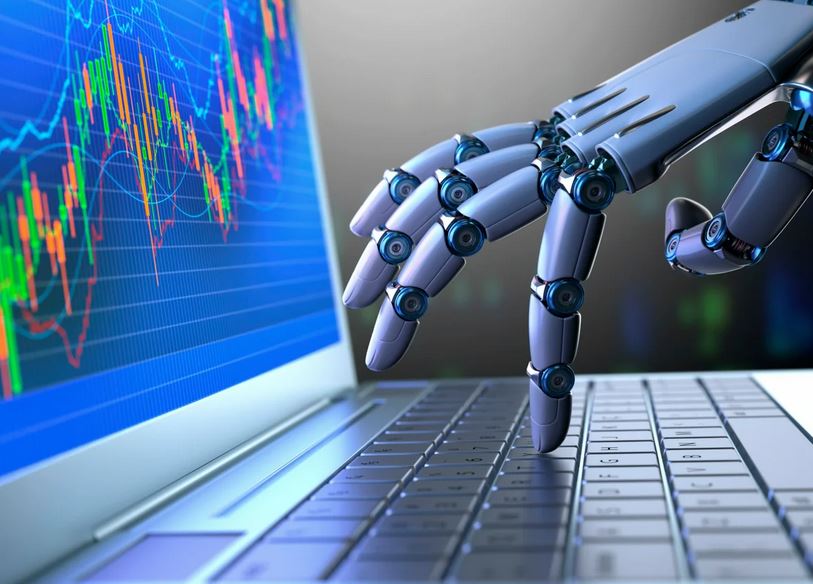
Neural Networks and Trading Robots
Neural networks are revolutionizing the world of trading robots. These powerful AI systems help developers create more sophisticated algorithms that can adapt to the ever-changing market conditions. However, it’s important to remember that current AI technology still has limitations. While these robots can analyze data and identify patterns, they lack the human ability to:
- Understand the “big picture”: Things like unexpected news events, geopolitical shifts, and overall market sentiment often escape the grasp of AI.
- Factor in fundamental analysis: Things like company earnings, economic indicators, and industry trends play a crucial role in successful trading, but robots struggle to incorporate this information effectively.
Essentially, true AI-powered trading that can truly mimic the human element, with its intuition and ability to grasp complex situations, is still a long way off.
Making the Most of Trading Robots: Tips
Trading robots offer exciting possibilities, but it’s important to use them wisely. Here are some key tips to maximize their effectiveness:
- Choose carefully. Selecting the right robot can be challenging. If you’re unsure, check out our EA ranking, and consider factors beyond profitability, such as maximum drawdown.
- Ensure uninterrupted operation. Invest in a reliable VPS to minimize disruptions caused by power outages or internet connectivity issues.
- Implement risk management. Always set Stop-Loss and Take-Profit orders for each trade. This helps limit potential losses and protect your capital, especially when unexpected market events occur.
By following these guidelines, you can leverage the strengths of trading robots while mitigating their inherent risks.
Conclusion
Trading robots can significantly simplify the work of traders and enhance trading efficiency. However, their use is associated with risks that must be taken into account. As for the artificial intelligence revolution, it will likely lead to the creation of more trading robots and make their development easier. Nevertheless, it is unrealistic to expect robots with fundamentally new levels of profitability and drawdown in the near future.